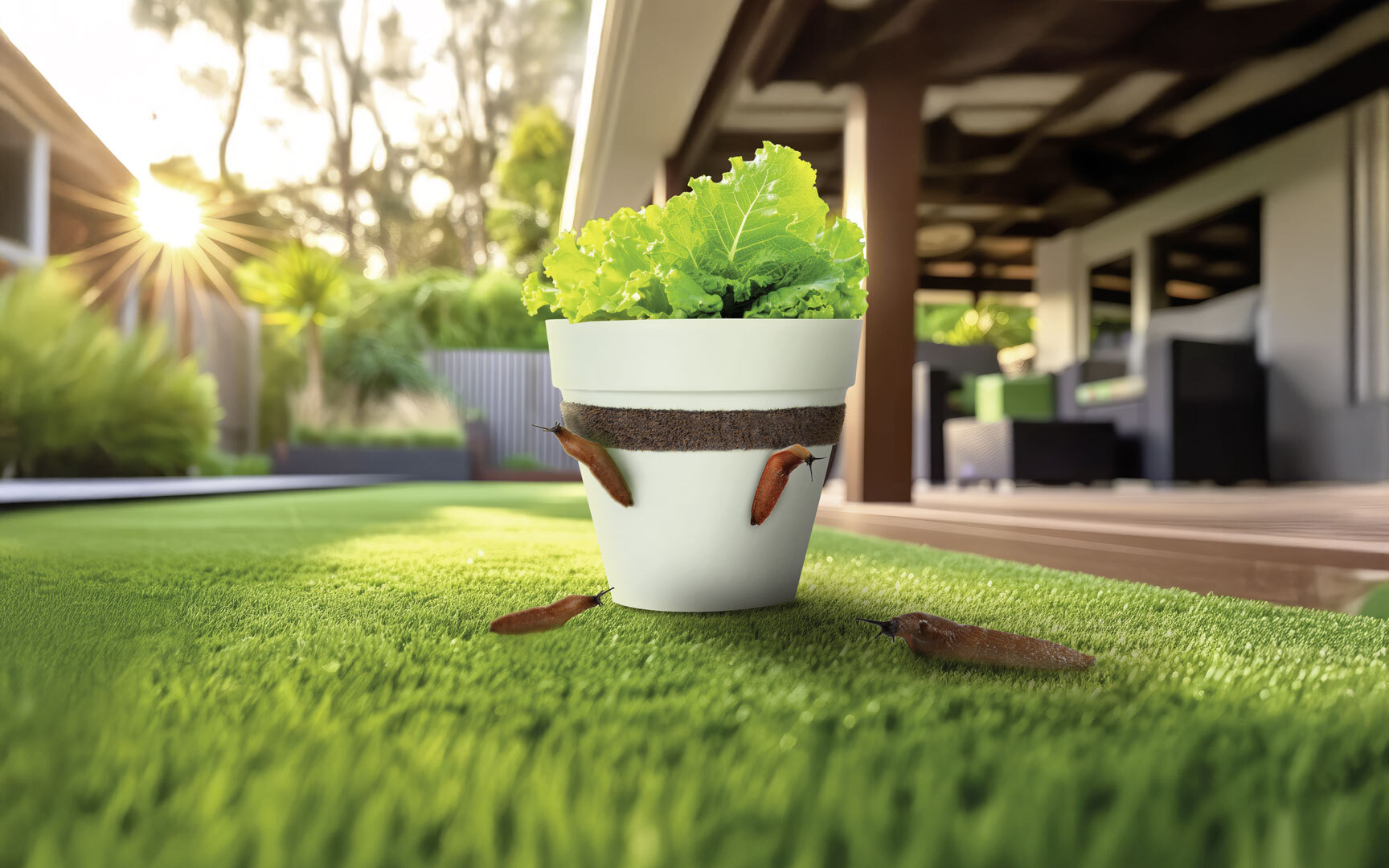
Snail Stop
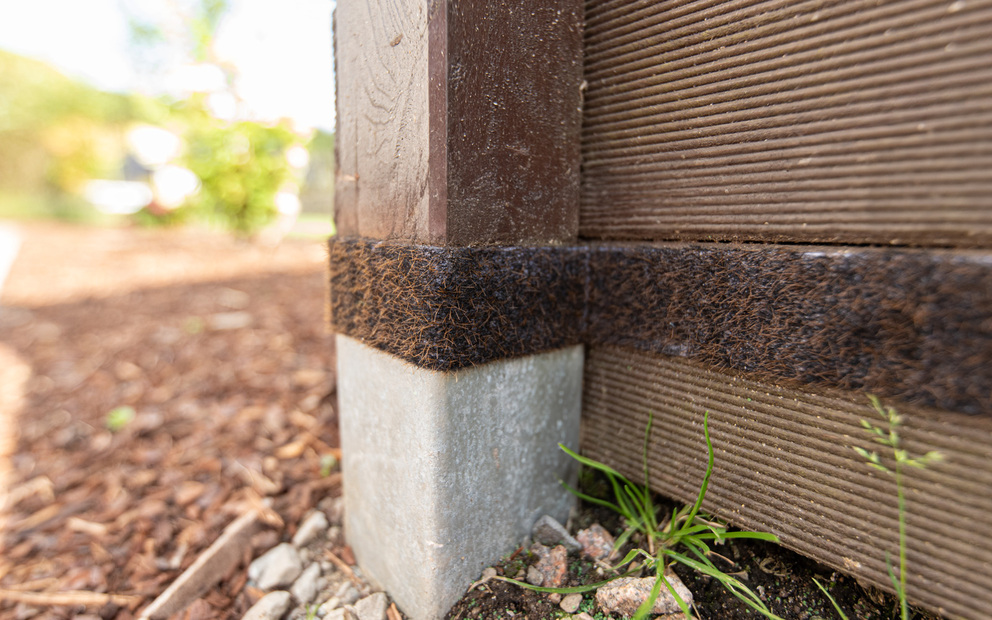
Animal-friendly protection
Our 3 m long slug tape provides effective and animal-friendly protection for your plants. Unlike chemical agents or traps, it does not harm pets or beneficial garden inhabitants. Thanks to its innovative structure with fine hairs, the tape keeps slugs away without killing them. This allows you to create a safe environment for your plants while helping to maintain the natural balance in your garden. Sustainable, effective and gentle – for an animal-friendly garden!

MADE IN GERMANY
Our snail tape stands for quality and innovation – developed and manufactured in Germany. With high-quality materials and careful workmanship, we guarantee a durable and reliable product that meets the highest standards. Sustainability and regionality are important to us: by manufacturing in Germany, we support local businesses and reduce transport distances. Trust in genuine German craftsmanship for the best protection for your plants!
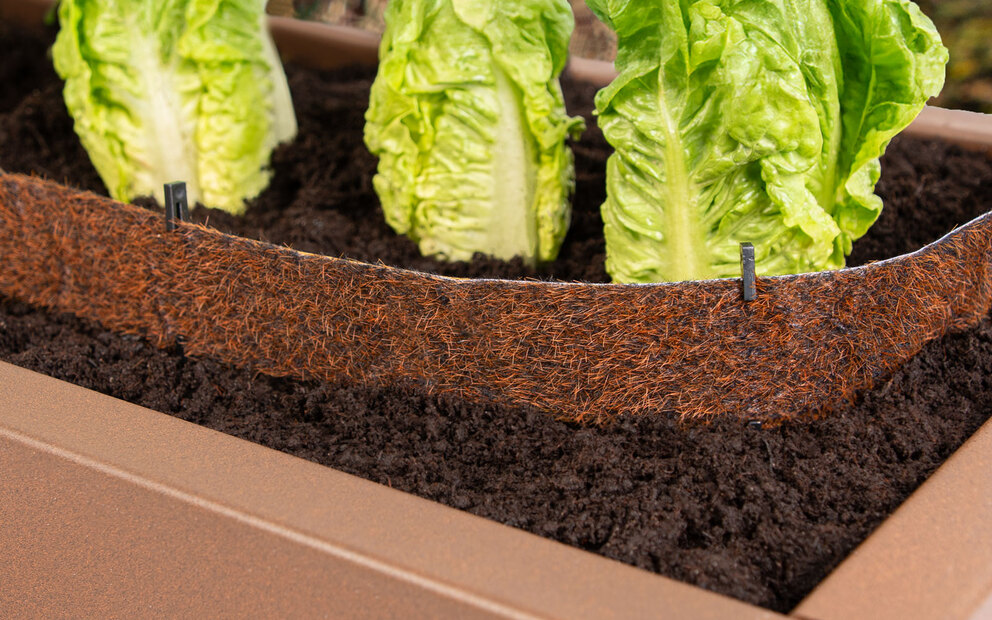
Fencing made easy
The ground spike expands the possibilities of our snail tape and makes protection even more flexible. Instead of attaching it to a pot, the tape is simply threaded onto the spike and stuck directly into the ground. The angled shape creates an additional barrier that makes it difficult for snails to cross. This means that beds or groups of plants can also be reliably protected – without the need for complex constructions. A simple and effective solution for securely fencing off endangered plants and keeping snails away in the long term.

Animal-friendly
Our snail belt is designed to be animal-friendly; the bristles do not harm the snails.
Keeps snails away
Snails cannot crawl over the tape, so plants remain unharmed.

Weatherproof
Come rain or shine, our snail tape delivers what it promises!

Easy installation
Measure, remove the adhesive backing, stick it on, and you're done!

You can count on it!
We do everything we can to ensure your success! We provide you with our knowledge and experience so that you can install products with excellent properties. As a company, we stand behind this with our certifications and quality standards.

Made in Germany
Made in Herscheid: a guarantee of quality and expertise. State-of-the-art manufacturing processes and high-quality coating in our in-house coating facility make our wildlife accessories an exclusive product.
What snails can I find in my garden and are they harmful?
There are many species of snails in the United Kingdom that are regularly seen in gardens. Here are some examples of snails that occur in gardens and whether they are pests:
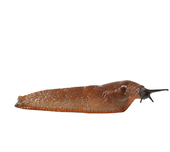
Spanish slug
(Arion vulgaris)
- invasive species
- is considered the main pest
- reddish brown to dark brown
- up to 15 cm long
- prefers to eat young plants and vegetables
- causes great damage
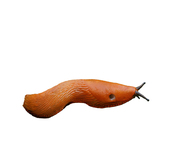
Red slug
(Arion rufus)
- Similar to the Spanish slug
- bright red
- up to 15 cm long
- prefers to eat young plants and vegetables
- potential pest, less widespread than the Spanish slug
Image©: Hans Hillwärt
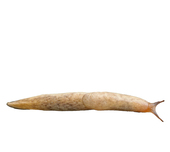
Netted field snail
(Deroceras reticulatum)
- smaller snail - 2 to 5 cm
- pale grey to brown with a net-like pattern
- eats roots, tubers and seedlings
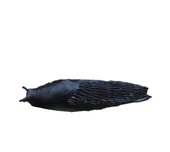
Black slug
(Arion ater)
- Large snail - up to 15 cm
- deep black or dark brown
- Young animals may be lighter in colour
- prefers dead plants
Image©: RikenMon
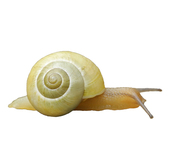
Garden snail
(Cepaea hortensis)
- small shell snail
- Yellow or brown body, often striped
- harmless
- prefers dead plants
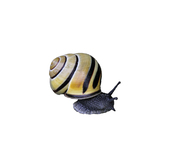
Grove ribbon snail
(Cepaea nemoralis)
- related to the garden ribbon snail
- bright yellow or pink casing
- not a pest
- contributes to the decomposition of plant residues

Large sea slug
(Limax maximus)
- large snail - up to 20 cm
- Grey to brown pattern with characteristic keel on the back
- useful
- eats dead plant parts
- eats other snails
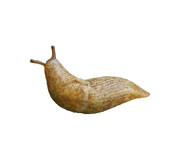
Garden slug
(Arion hortensis)
- grey-brown
- 3 to 5 cm long
- pest
- eats young plants, roots and leaves
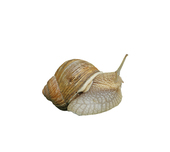
Roman snail
(Helix pomatia)
- large snail - up to 10 cm
- light brown, spiral-shaped casing
- not a pest
- eats mainly dead plant matter
- is bred for culinary purposes
It's that simple
We also offer ground spikes to go with our snail tape, so that the tape can be installed without glue. You can find the corresponding installation instructions here.
Supportive measures for snail control
Our snail barrier keeps out quite a few pests. However, if it does get overrun, we have a few tips for you to protect your plants even better:
Encourage natural predators
Hedgehogs, toads and birds: Create habitats such as leaf piles or watering holes to attract natural predators.
Tiger slugs: These beneficial creatures feed on snails and their eggs. Encourage their population in your garden.
Protect plants in a targeted manner
Mulching with bark mulch or lava granules: Snails avoid these materials.
Snail-proof plants: Plant plants that snails don't like, such as lavender, thyme or ferns.
Targeted planting: Keep sensitive plants protected in raised beds or planters.
Practical measures
Evening checks: Collect snails in the evening hours or after rain.
Remove hiding places: Remove hiding places such as boards or stones near flower beds.
Grounds maintenance and surroundings
Keep the soil dry: Snails prefer damp environments. Do not mulch too much and loosen the soil.
Regular hoeing: Hoeing the soil destroys snail eggs.
Mixed cropping and crop rotation
Mixed crops: Combine plants that repel snails with sensitive varieties.
Crop rotation: Rotate the locations of plants annually to disrupt the snail population.
Prevention
Act early: Start taking measures in spring, before snails multiply rapidly.
Set out snail traps: Use natural bait such as melon rinds or potato halves to collect snails in a targeted manner.
Do snails hide in the ground?
Yes, many species of snails burrow into the ground during the day to protect themselves from dryness and heat. Slugs in particular burrow into moist soil or hide under stones, leaves and wood.
Are snails only active at night?
No, snails are mainly active in damp weather, which is often the case at night. However, on cloudy or rainy days, they can also be seen during the day.
Do snails only eat young plants?
Snails prefer tender young plants with soft leaves, but can also cause considerable damage to older plants, especially lettuce, herbs and vegetables.
What damage do snails cause to plants?
Snails leave behind eaten leaves with irregular holes, gnawed stems and slime trails. Especially on damp nights, a snail infestation can destroy entire beds within a few hours.
What environmentally friendly methods are there for repelling snails?
In addition to the snail tape, there are other natural measures such as installing copper strips, creating barriers from coffee grounds or eggshells, and specifically encouraging snail predators such as hedgehogs, birds or ducks.
What are the advantages of a slug belt over slug pellets?
A snail barrier works purely mechanically and prevents snails from crawling over it without killing them. Unlike slug pellets, it is non-toxic to pets, children and beneficial insects and does not affect the ecological balance in the garden.
Is the slug tape also effective in the rain?
Yes, a snail barrier remains effective even in the rain, as the barrier works regardless of weather conditions. Unlike many home remedies such as coffee grounds or ash, it is not simply washed away.
How many snail tapes do I need for my flower bed?
That depends on the size of the bed. Measure the circumference of your bed and calculate the required length of the snail tape accordingly. It should be laid around the plants without any gaps.
Can I use the snail belt on uneven surfaces?
Yes, snail barriers are flexible and can also be installed on slightly uneven ground. For very uneven surfaces, we recommend adjustable snail barriers or a combination with raised beds.
Is the snail tape safe for pets and children?
Yes, a slug tape is completely non-toxic and poses no danger to pets, children or other garden inhabitants – unlike chemical slug repellents.
Is a snail barrier suitable for all types of plants?
Yes, the snail barrier can be placed around all plant beds or raised beds and effectively protects vegetables, flowers and herbs. It is particularly suitable for vulnerable plants such as lettuce, strawberries or marigolds.
How long does a screw conveyor last?
Durability depends on the material. High-quality spiral belts made of metal or durable plastic can be used for several years, while some models made of cardboard or natural materials need to be replaced after one season.
Does a snail barrier also protect against other pests?
A slug barrier is specially designed to repel slugs and reliably keeps them away. However, it does not help against other pests such as aphids or caterpillars.
Can a screw conveyor be damaged by strong winds or animals?
High-quality metal or sturdy plastic snail bands are very durable and weatherproof. In very strong winds or if there are curious animals around, the band should be securely fastened or embedded in the ground.